






HYUNDAI Era Kumandasız Kilit Setleri
Fiyatları görmek için giriş yapınız.
HYUNDAI Era Kumandasız Kilit Setleri
Bu ürün şu anda stokta yok.
Endişelenmeyin! E-postanızı girin, stokta olduğu anda size haber verelim.
Accent Era Kumandasız Set
Football Betting Fundamentals That Betzoid Covers in Detail
Football betting has evolved from informal wagers between friends into one of the most sophisticated financial markets in the world. With billions of dollars exchanged annually across legal sportsbooks, online platforms, and regulated exchanges, understanding the mechanics behind football betting has become essential for anyone looking to engage with it responsibly and intelligently. The sheer complexity of modern football betting markets means that casual participants often enter without a firm grasp of how odds work, what value truly means, or how bookmakers construct their margins. A structured, educational approach to these fundamentals can make the difference between informed decision-making and costly misunderstanding.
The Architecture of Football Odds and How They Are Constructed
At the heart of every football bet lies the concept of odds, which serve as the mathematical expression of probability assigned to a given outcome. Bookmakers employ teams of analysts, statisticians, and traders to build their initial lines, often referred to as opening odds. These figures are not simply reflections of what bookmakers believe will happen; they are carefully calibrated to ensure a built-in margin that guarantees profitability for the house regardless of the match result.
The three primary formats in which odds are expressed globally are decimal, fractional, and American moneyline. Decimal odds, dominant across Europe, Australia, and Asia, represent the total return per unit staked, including the original stake. Fractional odds, historically rooted in British horse racing culture, express profit relative to stake. American odds use a positive and negative system to indicate underdogs and favorites respectively, with the figures representing either the profit on a $100 stake or the amount needed to win $100.
Understanding the implied probability embedded within any set of odds is a foundational skill. Converting decimal odds to implied probability involves dividing 1 by the decimal figure. For example, odds of 2.50 imply a 40% probability of that outcome occurring. When you sum the implied probabilities across all possible outcomes in a market, the total typically exceeds 100%, and this excess represents the bookmaker’s overround or vigorish. In a standard three-way football market covering home win, draw, and away win, the overround commonly ranges between 5% and 8% at mainstream bookmakers, though sharp operators and betting exchanges often offer significantly tighter margins.
Line movement is another critical dimension of odds architecture. As bets are placed and new information emerges, such as team news, weather conditions, or significant betting volume on one side, bookmakers adjust their lines to balance liability. Tracking line movement can reveal where sharp money is flowing and provide insights into market sentiment that raw odds alone cannot convey.
Core Betting Markets in Football and Their Strategic Implications
Football offers an extraordinarily diverse range of betting markets, each with distinct characteristics, variance profiles, and strategic considerations. The match result market, commonly known as the 1X2, is the most straightforward and widely recognized. Bettors choose between a home win, a draw, or an away win, with no handicap applied. While simple in structure, this market demands a nuanced understanding of team form, head-to-head history, home advantage effects, and squad availability.
Asian handicap betting emerged as a sophisticated alternative to the traditional 1X2, originating in Asian markets and subsequently spreading globally. By applying a goal handicap to one team, the draw outcome is eliminated in most Asian handicap variations, creating a two-way market. This structure not only removes the draw variable but also allows bettors to find value in matches where one team is heavily favored by backing the underdog with a goal advantage. Quarter-ball and half-ball handicaps introduce further nuance, allowing for partial refunds in certain scenarios.
Over/under totals markets focus on the aggregate number of goals scored in a match rather than the specific result. The most commonly offered line is 2.5 goals, though sophisticated sportsbooks now offer granular options ranging from 0.5 to 5.5 or beyond. Analyzing factors such as both teams’ attacking output, defensive solidity, pace of play, tactical systems employed by managers, and historical trends in specific competitions is essential for approaching totals markets with any degree of precision.
Both Teams to Score, often abbreviated as BTTS, has grown substantially in popularity over the past decade. Research into team-level scoring and conceding rates, combined with an understanding of managerial philosophies and squad depth, forms the analytical backbone of BTTS wagering. Platforms like Betzoid provide detailed breakdowns of these markets, explaining not only how each bet type functions mechanically but also what statistical and contextual factors experienced bettors examine when evaluating them, making such resources genuinely educational for those seeking to deepen their understanding.
Correct score markets, first goalscorer bets, and player-specific proposition markets represent the higher-variance end of the football betting spectrum. These markets carry significantly wider margins for bookmakers and are inherently more difficult to assess with precision, yet they attract substantial interest due to the elevated potential returns they offer.
Bankroll Management, Value Betting, and the Mathematics of Long-Term Profitability
Perhaps the most underappreciated dimension of football betting is the discipline of bankroll management. Even bettors who possess genuine predictive skill can face financial ruin through poor staking practices. The Kelly Criterion, developed by mathematician John L. Kelly Jr. in 1956, provides a mathematically optimal framework for determining stake size based on the perceived edge in any given bet. The formula calculates the optimal fraction of one’s bankroll to wager by considering both the probability of winning and the odds offered. While pure Kelly staking can produce aggressive swings, many experienced bettors employ a fractional Kelly approach, staking between one-quarter and one-half of the full Kelly recommendation to reduce variance while maintaining positive expected growth.
The concept of value is central to any serious discussion of long-term profitability. A value bet exists when the probability of an outcome occurring is greater than the probability implied by the odds offered. For instance, if a bettor assesses the true probability of a home win at 55% but the bookmaker’s odds imply only a 45% probability, a positive expected value situation exists. Consistently identifying and capitalizing on such discrepancies is what separates recreational bettors from those who approach the activity as a disciplined analytical exercise.
Expected value, expressed as EV, is the mathematical expression of this concept. Calculated by multiplying the probability of winning by the potential profit and subtracting the probability of losing multiplied by the stake, a positive EV indicates a theoretically profitable bet over a large sample size. It is crucial to understand that EV is a long-run concept; individual results will vary considerably due to variance, and even high-quality bets lose frequently in the short term.
Record-keeping is a practice that separates disciplined bettors from impulsive ones. Maintaining detailed logs of every wager, including the market, odds, stake, reasoning, and outcome, allows bettors to identify patterns in their performance, recognize which markets they have genuine edge in, and detect cognitive biases that may be distorting their judgment. Recency bias, confirmation bias, and the gambler’s fallacy are among the most common psychological pitfalls that systematic record analysis can help expose and correct.
Closing line value, or CLV, has emerged as one of the most robust metrics for evaluating betting skill. It measures whether a bettor consistently obtains odds that are better than the final odds available at market close. Since closing lines represent the most efficient consensus of market opinion, consistently beating them suggests that a bettor is identifying value before the broader market does, which is a strong indicator of genuine analytical skill rather than short-term luck.
Understanding Football Competitions and Their Impact on Betting Dynamics
Football’s global calendar encompasses hundreds of competitions across dozens of countries, each presenting unique characteristics that influence betting markets in distinct ways. The English Premier League, Spain’s La Liga, Germany’s Bundesliga, Italy’s Serie A, and France’s Ligue 1 represent Europe’s top-tier domestic competitions and attract the deepest liquidity and most efficient markets globally. The depth of information available for these leagues, combined with the volume of betting activity, means that finding genuine edges is considerably more challenging than in lower-profile competitions.
Conversely, lower-division leagues in Eastern Europe, South America, and Asia often feature less efficient markets due to reduced analyst coverage and lower betting volumes. While these markets can theoretically offer more exploitable inefficiencies, they also carry greater informational risk, as team news, pitch conditions, and motivational factors are harder to verify and assess accurately.
European club competitions such as the UEFA Champions League and Europa League introduce cross-border dynamics that add complexity to betting analysis. Teams competing on multiple fronts may prioritize certain fixtures over others, leading to squad rotation that can dramatically alter expected performance levels. Understanding a manager’s historical approach to competition prioritization is therefore an important analytical consideration in these contexts.
International football, encompassing World Cup qualifying, continental championships, and friendly matches, presents its own set of analytical challenges. National team squads are assembled infrequently, meaning players may arrive with varying fitness levels, tactical familiarity can be limited, and the motivational stakes differ significantly between qualifying matches and exhibition games. Recognizing these structural differences and adjusting analytical frameworks accordingly is a mark of sophisticated football betting analysis.
Seasonal trends also play a meaningful role in football betting dynamics. Early-season markets are often less efficient as bookmakers and bettors alike have limited data on which to base assessments of team quality and form. As the season progresses, the volume of information grows, markets become more efficient, and the opportunities for value tend to narrow. End-of-season dynamics, where some teams are chasing titles or promotion while others have nothing to play for, create motivational asymmetries that can generate exploitable situations for attentive bettors who track these developments closely.
Conclusion
Football betting, when approached with genuine intellectual rigor and disciplined methodology, is a domain of considerable depth and complexity. Understanding how odds are constructed, recognizing the strategic distinctions between different market types, applying sound bankroll management principles, and appreciating the unique dynamics of various competitions are all essential components of a well-rounded analytical framework. These fundamentals do not guarantee profitability, but they provide the structural foundation upon which informed, responsible engagement with football betting markets can be built. For those committed to learning rather than guessing, the educational pathway through these concepts is both challenging and genuinely rewarding.
| Ağırlık | 0,00 g |
|---|---|
| Renk | Siyah |
Değerlendirmeler
İlgili ürünler
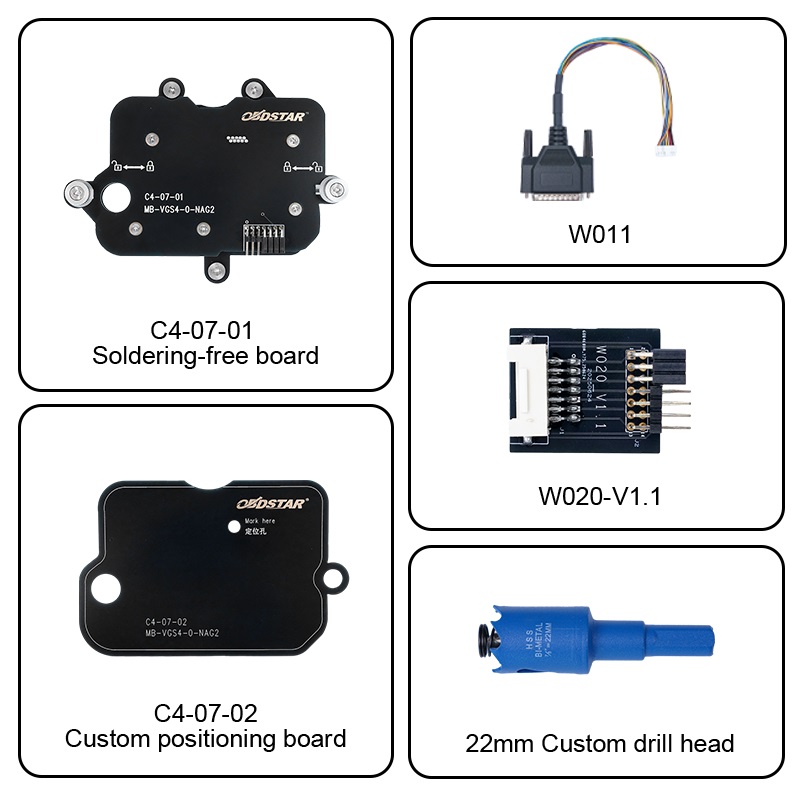
4010213 – OBDSTAR C4-07 MB Transmisyon Adaptör Kit
OBDSTAR C4-07 MB VGS4-0 NAG2 Transmisyon Adaptör Kiti, Mercedes-Benz FBS4/DAS4 sistemli 7G-Tronic VGS4-0 NAG2 şanzıman kontrol ünitelerinde programlama ve veri işlemleri için kullanılan profesyonel adaptör setidir. JTAG bağlantısı üzerinden lehim gerektirmeden işlem yapılmasını sağlar ve OBDSTAR MP001 ile kullanılır.